~* post updated January 5th, 2026 *~
What Happened Before the Attacks
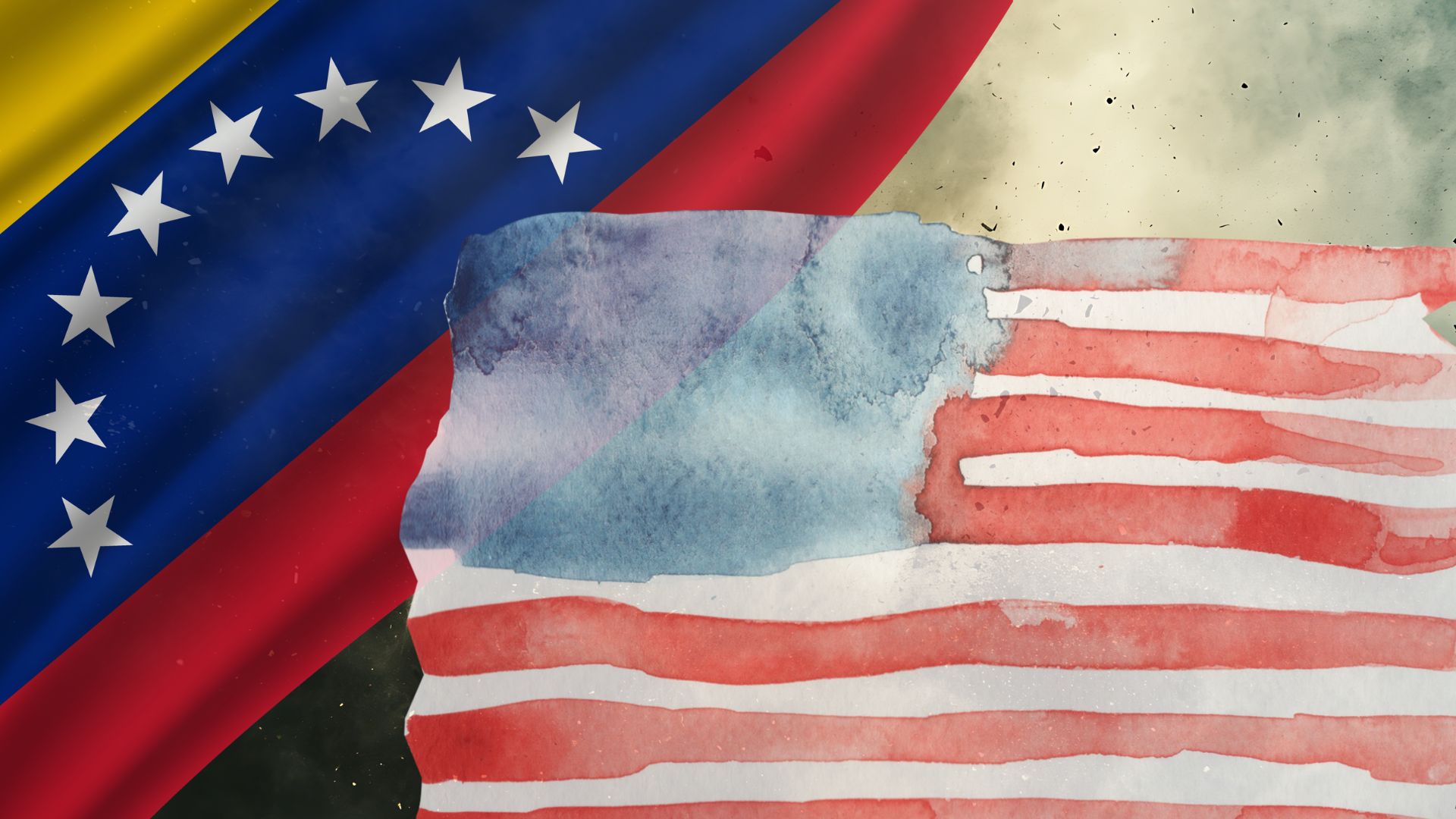
Here’s what’s been happening between Venezuela and the United States of America.
In the months leading up to the operation, the United States steadily increased pressure on Venezuela, assembling a visible military presence in the Caribbean. This included naval deployments, maritime patrols, and the interception of Venezuelan vessels, some carrying crude oil and others alleged to be linked to drug trafficking. These actions signaled a gradual escalation at sea well before any direct strike on Venezuelan territory occurred.
Here are some recent news bits that also apply to the following analysis:
- Nicholás Maduro, President of Venezuela, since late 2025 has been publicly demonstrating his desire for peace (and ‘no crazy war’) by dancing.
- January 2nd, Maduro publicly invited USA President Donald Trump to cooperate; including diplomacy, negotiation, economy, and investment in Venezuela’s Oil Sector.
- Also January 2nd, a senior envoy representing Xi Jinping, President of the People’s Republic of China, visited Caracas in a public reaffirmation of Venezuela-China cooperation. Their objectives centered around multipolar alignment and global development.
- The United States is no longer Venezuela’s principal oil buyer, being displaced by China. Venezuela owes China more than ~$10 billion with long-term agreements on repayment with crude oil.
Attacks, Explosions, and Capture
After Maduros peace messaging on January 2nd, military action was reported early the next day (~3am January 3rd, 2026). Explosions were heard in Caracas and other Venezuelan regions, there were low-flying aircraft and strikes on infrastructure as well as urban zones. As this is being written, there is no Venezuelan death count or casualty toll known, though Trump says his troops are fine and in tact. Data is still being collected.
Maduro and his wife were captured and removed from Caracas, Venezuela and reports says they are being brought to New York. Trump is accusing Maduro with Narco-terrorism among other drug and weapon related claims.
- Narco-terrorism is a highly debated term among theorists. Narco activity is Organized Crime, seeing as it has lucrative ends. Organized Crime groups can apply terrorist tactics, but the more widely accepted definitions of terrorism include the presence of a political message/goal to change the status quo, and violence to transmit said message.
- Drug trafficking is not terrorism in itself.
What’s interesting here is the fact that Venezuela is a known dictatorship. If Trump had made the capture based on claims of improving the Venezuelan government’s authoritarian regime, it’s possible Maduro could have been sent to international courts to settle the dispute. However, since the capture is based on ‘narco-terrorism’ against the USA, that allows Trump to hold Maduro on American soil with no international legal process.
We still don’t know exact operational details, casualty numbers, or the scope of damage.
Strategic Ambiguity
In the ripe period of less than 24 hours of this advance in conflict, the uncertainty is high. You would think that’s normal for war-like events, but news sources are presenting unusually conflictive narratives.
- Framing from the US is decisive and controlled, it focuses on the discourse of Trump and the strength of USA’s power.
- Venezuelan sources focus on the violation of sovereignty and civilian harm.
- (Update) This post was written within the first 24 hours of the event, when early reporting (particularly from official and diplomatic Venezuelan outlets) emphasized issues of sovereignty and foreign intervention. As more information and public reactions have emerged, it is now clear that many Venezuelans are celebrating the capture, viewing it as accountability rather than invasion. This update reflects the evolving informational landscape and public sentiment.
- Sources from outside the region, like Al Jazeera, report on the international response and the numerous countries speaking out against Trump’s actions.
This ambiguity can be analyzed as a strategic tactic, destabilization as a tool (Namra, 2026). Not being able to understand the impact of this event forces international response in chaos (from other countries, financial markets, and local Venezuelan elites). Psychologically, the situation shows the mass world population who has tuned in that peace does not come before violence, and aggressive actors don’t favor transparency. It’s causing a scene of coercive bargaining instead of an open war declaration.
Geostrategy and Multipolar Tension (Undercurrents of Maduro’s Capture)
Zooming out from the ‘narco-terrorist’ narrative, Venezuela is a known geopolitical hot spot for its massive natural oil reserves and precious minerals necessary for technological supply chains.
Venezuela is also strategically placed at the top of South America, and is maritime-locked into the Caribbean. Their maritime routes connect to México, USA, and Cuba. Going further out, it even connects to Europe through the Atlantic Ocean (landing in Spain/the Netherlands).
China’s posture in Venezuela is economic and symbolic, without military involvement. The fact that Venezuela has just realized cooperative talks with China, hours before Maduro’s capture, remains a curious coincidence. Though it is one of those ‘quirks’ that makes an internationalist raise an eyebrow (do political coincidences of this caliber exist?).
- It’s currently unknown if Xi Jinping’s envoy was present in Caracas at the time of Maduro’s capture. If that were to be the case, it could increase diplomatic tensions between USA-China and their independent petroleum pursuits globally.
Considering the geopolitical organicist theory, USA is simply following the pattern of ‘eating to survive’. If the government perceives itself as weak or lacking, the State (considered as a living organism) proceeds by finding and taking over external resources.
Refocusing regionally on the Americas, the intervention in Venezuela amplifies anxieties in Latin America regarding sovereignty. Even governments critical of Maduro’s leadership are uneasy with the idea of externally imposed regime changes. It also deepens political polarization, dividing ideologies about whether the intervention is necessary as seen by Washington, or a violation of sovereignty (as seen by the vast majority of ‘left-leaning’ governments).
The instability in Venezuela may increase migration pressures, renewing outward movement and putting pressure on neighboring states like Colombia and Brazil.
Meanwhile, Mexico is in a delicate position by being geographically and economically tied to the US, and due to the Mexican foreign policy being highly committed to non-intervention. Mexico has already responded with social media posts reminding the international community of the United Nations Charter (Al Jazeera, 2026). In this situation, regional organizations have limited capacity to respond and in turn, end up highlighting the struggles of multilateralism in Latin America when larger powers enter the picture.
Beyond Venezuela, the escalation echoes across the region by reviving intervention fears, deepening ideological divides, and exposing the limits of institutions in moments of forced intervention.
What Will Happen to Venezuela in 2026?
Trump’s statement (made midday January 3rd, 2026) that the United States will “run the country” until a transition occurs reframes the operation from a targeted capture into a temporary governing role, raising questions about occupation, sovereignty, and duration.
The meaning of the US ‘running Venezuela’ is currently unclear. In practice, the most probable action would be a form of supervision instead of day-to-day governance. Based on the mentioned contexts, the US would focus on security, oil, and international recognition. Ideally, the focus should be on political transition mechanisms to assure that Venezuela can move towards a clean, democratic reset. If these mechanisms fail to be implemented, the political uncertainty could open the door to the competition of political elites and military factions.
It’s unlikely that the territory will be completely captured/owned by the USA due to the military and geopolitical implications, and the $10 billion Venezuelan debt to china, however Trump could be removing Maduro to encourage a new Venezuelan leader with stronger ties to Washington.
China & Venezuelan Oil
In any case, if the United States increments control/power especially regarding Venezuelan petroleum, it could be in an attempt to control the oil flow to China. If Venezuela were to become ‘American’, then China would end up being the USA’s principal oil exportation destination.
Even considering this, Venezuela is not considered a core interest for China. Chinese exterior politics avoid confrontation unless China’s territorial integrity or the immediate regional balance in Asia is at risk. Venezuela is considered a commodity supplier and a multipolar ally to China, so even if the territory is under US control, China wouldn’t risk breaking their long-standing non-intervention doctrine for direct conflict with the States. It’s more likely that China would encourage negotiation and diversify by finding other sources for their petroleum closer to home.
Conclusions on the USA Capture of Maduro and the Future of Venezuela
The immediate question is what will happen to Venezuela. The removal of a leader does not automatically fix a country, even if it has been struggling with authoritarian rule.
The already unstable state of Venezuela is now faced with a power vacuum, and whether the international community sees this as necessary intervention or as illegal violation will depend on who fills the vacuum and how.
Whether new leadership is negotiated, externally backed, or internally forced will determine the trajectory of Venezuela towards further decline or towards recuperation. The capture has opened a far more complex phase of international relations.
References
- Venezuelan oil industry: world’s largest reserves, decaying infrastructure. (2026). Reuters. https://www.reuters.com/business/energy/venezuelan-oil-industry-worlds-largest-reserves-decaying-infrastructure-2026-01-03/
- La Jornada, Á. G. E. P. P. (2026, January 3). Venezuela y China refuerzan cooperación con visita a Caracas de enviado de Xi Jinping. La Jornada. https://www.jornada.com.mx/noticia/2026/01/02/mundo/venezuela-y-china-refuerzan-cooperacion-con-visita-a-caracas-de-enviado-de-xi-jinping
- Namra, A. (2026, January 3). US attack on Venezuela told as a story of resources, sovereignty and global politics | Countercurrents. Countercurrents. https://countercurrents.org/2026/01/the-venezuela-us-confrontation-told-as-a-story-of-resources-sovereignty-and-global-politics/
- BBC News. (2026, January 6). Venezuela latest: Trump says US will “run” Venezuela until “safe transition can take place” – watch live. https://www.bbc.com/news/live/c5yqygxe41pt



One response
[…] top of that, we can see the globalization of fear. International headlines heat up (January 2026), suddenly influencers from the Netherlands are sharing the pamphlets sent by their government […]