Recently on a certain side of the algorithm, Solarpunk is booming. Artistic renderings of a nature-engulfed cityscapes mixed with rising discontent with the current international systems. Where did it come from? Where will it go? Let’s break it down.
What is Solarpunk?
Solarpunk started as a proposed literary genre, but it was never separate from revolutionary thought.
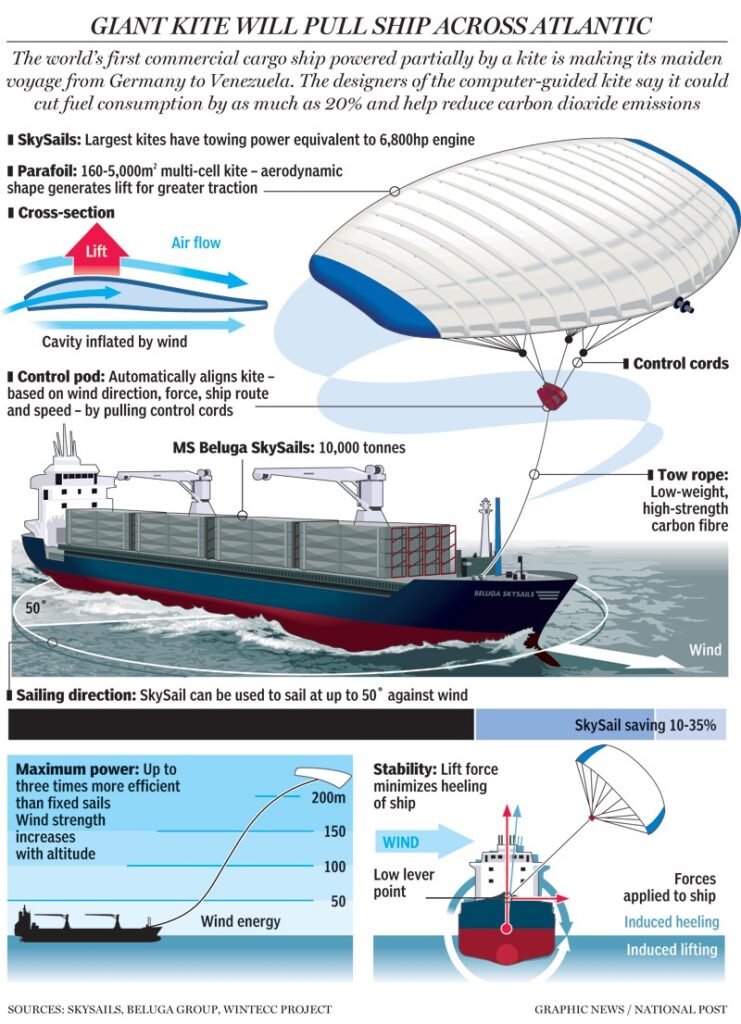
The digital conceptual origins date back to 2008 when it was coined in a blog post titled “From Steampunk to Solarpunk” by an anonymous author who was inspired by the world’s first ship partially powered by a computer controlled kite. They mirror Steampunk’s basis: alternative futures where oil is not the primary source of energy.
While steampunk uses steam engines and Victorian tech, the author contemplates an economy based on renewable energy citing Norman Spinrad’s “Song from the Stars” where the types of energy are muscle, sun, wind, and water, leading to the proposal of a new literary genre: Solarpunk.
Even back then, the author deliberately acknowledges the historical interplay between science fiction and politics.

In 2012, one of the more overlooked origins is in Latin America. Solarpunk did not start as a Tumblr trend as is widely believed. Brazil changed the game by showing how these Solarpunk stories can be exciting and hopeful, looking towards a sustainable future by publishing “Solarpunk: Histórias Ecológicas e Fantásticas em um Mundo Sustentável” edited by Gerson Lodi-Ribeiro.
The more recent primary source is considered Adam Flynn’s “Notes Toward a Solarpunk Manifesto” in 2014 outlining the futurist worldview. He states that Solarpunk is the alternative to denial and despair. Looking at world instability, energy privatization, political cynicism and inequality, Solarpunk is about creating a better world for us now—and the generations to follow. Instead of ‘smart cities’, he says, the goal is ‘smart citizenry’.
Fast forward to cerca 2019 and the Solarpunk Manifesto was published by the Solarpunk Community. Largely reusing the outline from Flynn’s notes, it orders the concepts into a list of 22 points stating the missions and details of what Solarpunk is and can be. Point #3 on the list sums it up beautifully stating that the movement “embodies the best of what humanity can achieve: a post-scarcity, post-hierarchy, post-capitalistic world where humanity sees itself as part of nature and clean energy replaces fossil fuels.”
Solarpunk Aesthetic
While the Manifesto mentions a combination of aesthetic origins from 1800s frontier living, Art Nouveau, Ghibli and more, the 2021 animated short “Dear Alice” materialized the look. Holographic technology, drones, robots, flying school buses… all working in harmony with nature and humans.
Surprisingly, it was a Chobani yogurt commercial with music by a composer from Studio Ghibli itself. While the irony of a corporation helping popularize the movement is not lost on us, it does include the ethical basis “Nothing worth doing is easy. The land is more than just dirt, if you look after it, it will feed you forever.”
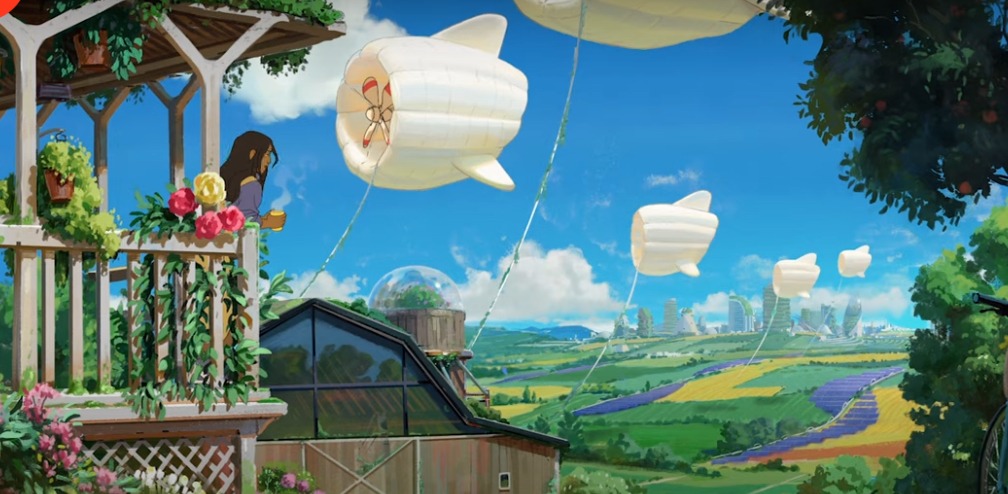
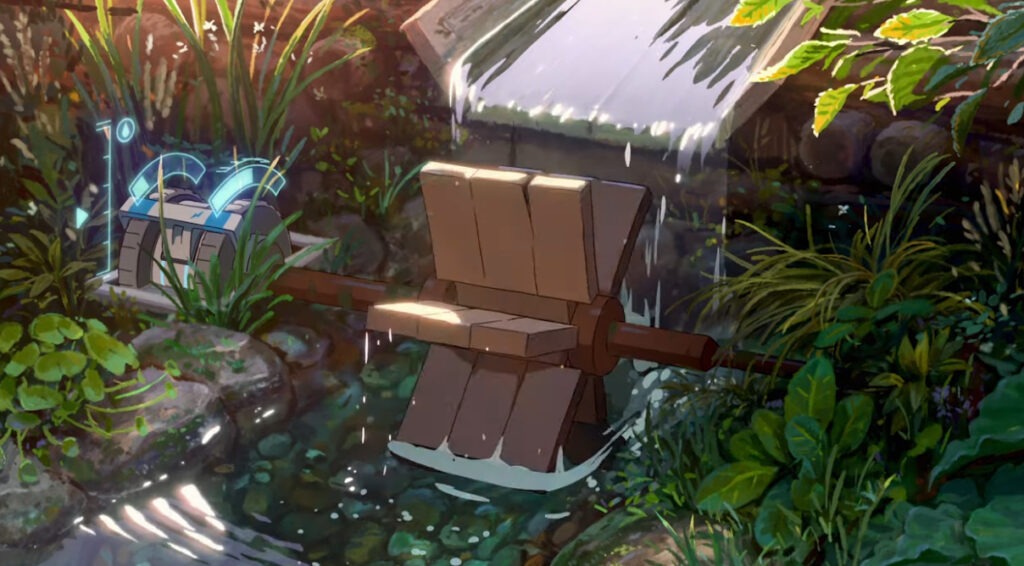
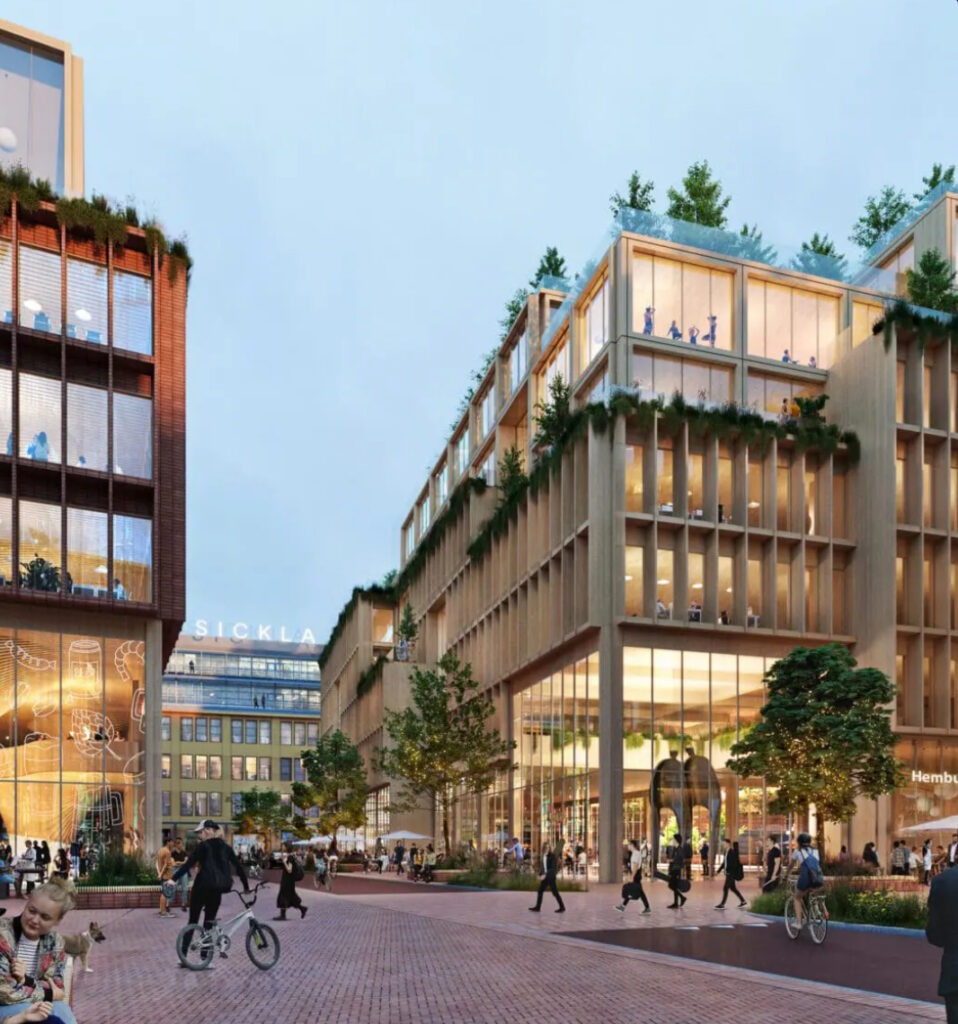
With the visual language crystalized after the 2014 Notes and Tumblr boom, communities started using the Solarpunk hashtag even more, sharing conceptual art and even stylish outfits. Pushing past aesthetics, these same communities promote renewable energy as tasteful and natural for humanity. Solar panels, wind turbines, cities covered in vegetation, community garden concepts, all based around the color palettes of nature instead of the sterile white technological futurism that has been largely used in media.
Aesthetic was never the point, it was always political.
The Solarpunk Revolution
The aesthetic is appealing for a reason, humans have an innate biological preference for living systems. This is based on Wilson’s biophilia hypothesis; we have evolved for millions of years in natural environments, which measurably reduce our stress and restore cognitive function.
So the aesthetics is more than just ‘pretty nature’, it’s healing natural human necessity, biologically calibrated by design. Communities with solarpunk values and practices feel different because they quite literally are. It’s a rejection of the hyper industrialized capitalist paradigm that currently dominates the world. It’s taking back what was always meant to be—humans living in harmony with nature.
Solarpunk doesn’t demonize technology, it harmonizes with it. Natural resources don’t have to be extracted like oil, there are endless alternatives that can (and do) benefit humanity, technology, and the planet Earth all at once.
While straightforward in theory, said industrialist paradigm complicates the flourishing of the Solarpunk movement. Fossil fuels make up around 86% of the global energy economy, promoting international interdependence in a way that is detrimental to the planet and ultimately our human wellbeing. This is important to highlight because the functioning of Solarpunk looks at local and regional levels—and the undoing of international energy interdependence is economically complex, to say the least.
Not all is lost though, Solarpunkists, the groundwork towards a planetary conscious is already in motion.
Solarpunk Communities & Conclusions
Around the world the boom continues to materialize, now more than ever. Community gardens with shared harvests, mini-circular economies on the local level, earth-healing projects to recover industrialist damage.
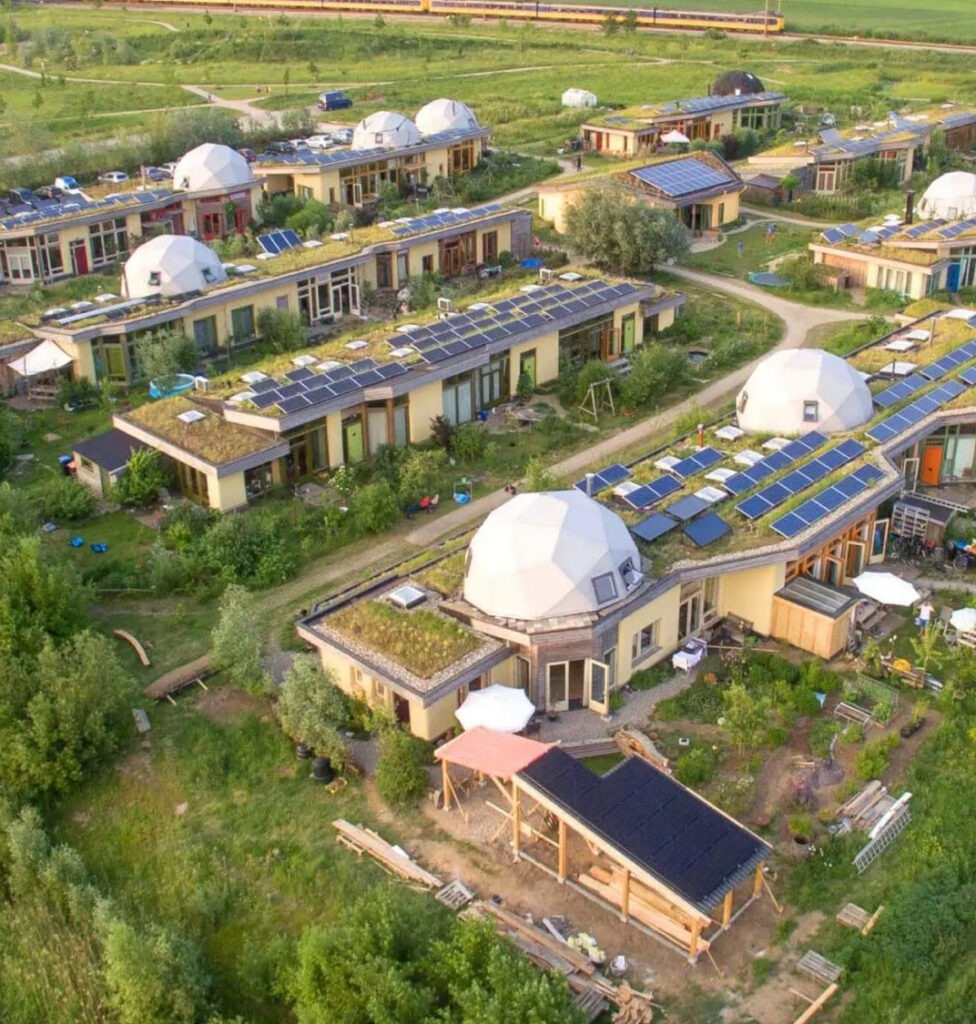
There are eco-villages in Scotland, India, even the Netherlands which has been used as a direct model for solarpunk development. Milan is developing vertical forests. Canberra reached 100% renewable electricity. The progress is real albeit currently uneven and finding its footing.
This means that the question is no longer whether a better world is imaginable. Solarpunk has already answered that decisively. The question is whether we can move fast enough with sustainability, accessibility, and whether the movement can stay honest about what that requires.
The aesthetic alone is not the revolution, but it points toward one. The revolution is in the seed library in the old phone box, the community energy cooperative, the city that decided to measure wellbeing instead of growth. It’s in the people who looked at the current trajectory of world systems and chose, deliberately, to build something else instead.
Solarpunk asks us to start where you are, with what you have and to not wait for permission. Building the future can only start here and now, and it’s only just begun.

References & Solarpunk Resources
- From steampunk to solarpunk. (2008, August 7). Republic of the Bees. https://republicofthebees.wordpress.com/2008/05/27/from-steampunk-to-solarpunk/
- Solarpunk: Notes toward a manifesto – Project Hieroglyph. (2014, September 4). Project Hieroglyph. https://hieroglyph.asu.edu/2014/09/solarpunk-notes-toward-a-manifesto/?source=post_page—–8bcf18871965—————————————
- A Solarpunk manifesto. (n.d.). The Anarchist Library. https://theanarchistlibrary.org/library/the-solarpunk-community-a-solarpunk-manifesto
- Hart, M. (2026, February 26). Solarpunk anime scored by Ghibli composer shows Bright Future – Nerdist. Nerdist. https://nerdist.com/article/dear-alice-solarpunk-anime-short-studio-ghibli-composer/#
- Solarpunk Cities. (n.d.). SolarPunk: City Projects, technology, energy, arts, health | SOLARPUNK Cities. https://solarpunkcities.com/








No responses yet