
Understanding Fascism in International Relations: A Historical and Contemporary Analysis
Fascism, within the realm of international relations, is a complex and often debated term. Initially emerging in early 20th-century Europe, fascism represented a radical authoritarian nationalist political ideology.
Britannica defines fascism as a political ideology and mass movement.
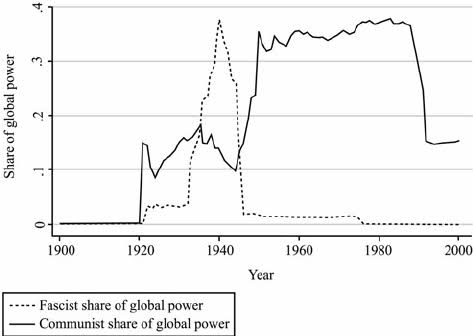
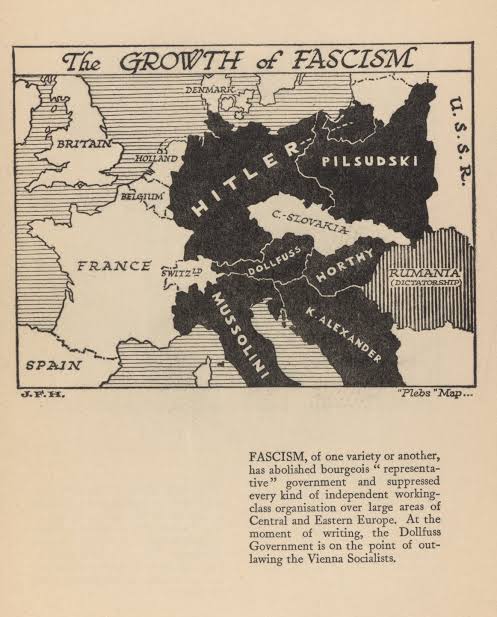
It dominated many parts of central, southern, and eastern Europe between 1919 and 1945 and that also had adherents in western Europe, the United States, South Africa, Japan, Latin America, and the Middle East.
The Council on Foreign Relations (2023) describes fascism it as a far-right form of government characterized by dictatorial power, forcible suppression of opposition, and strong control of society and the economy. It also explains the historical context of fascism, its development in the early 20th century, and its distinguishing features, such as extreme nationalism, disdain for democracy, and the belief in natural social hierarchy.
Historical Context
Historically, fascism’s roots can be traced back to the post-World War I era, particularly in Italy under Benito Mussolini. Mussolini’s fascism was marked by the promotion of nationalist and imperialist objectives.
In academic literature, Robert Paxton, in “The Anatomy of Fascism,” provides a comprehensive definition, identifying fascism as a form of political behavior marked by obsessive preoccupation with community decline, humiliation, and victimhood. Paxton also emphasizes the importance of compensatory cults of unity, energy, and purity, where a mass-based party of committed nationalist militants works with traditional elites. It abandons democratic liberties, and pursues with violence and without ethical or legal restraints goals of internal cleansing and external expansion.
Fascism in International Relations Theory
In international relations theory, Fascism has been analyzed as an extreme form of nationalism that can profoundly impact global dynamics. Theorists have examined how fascist regimes, through their aggressive expansionist policies and disregard for international norms, have historically led to conflicts and reshaped international order. For instance, the aggressive nationalism of Nazi Germany under Hitler significantly contributed to the outbreak of World War II.
In recent years, the term “Fascism” has been used in international politics to describe regimes or movements that exhibit authoritarian, nationalist, and often xenophobic tendencies. Contemporary discussions often focus on the rise of nationalist movements and leaders who exhibit characteristics reminiscent of historical fascism. However, the application of the term in modern contexts is often contentious and debated, reflecting the complexities of defining fascism in a rapidly changing global political landscape.
Understanding Aspects of fascism through IR Theories
Theories that could be perceived as supporting facets of Fascism, though not endorsing its ideology, include:
- Statism: Emphasizes the central role of the state in human life and society. In fascism, the state is supreme, and individual interests are subordinate to it.
- Elitism: Advocates that a society should be led by its most capable members. Fascism often aligns with this idea, promoting a natural hierarchy led by a superior leader.
- Nationalism: This theory underscores the importance of national identity and often supports strong state sovereignty, which aligns with fascism’s extreme nationalist sentiment.
Understanding fascism in international relations is crucial for comprehending the forces that have shaped, and continue to influence, global politics. It offers insights into how extremist ideologies can disrupt international peace and stability. In today’s political climate where nationalist and authoritarian tendencies are resurgent in various parts of the world, a deep understanding of fascism’s characteristics is more relevant than ever.
This knowledge not only helps in recognizing early signs of such movements but also in formulating effective responses to safeguard democratic values and international order.
Sources
- What is fascism? (s. f.). World101 from the Council on Foreign Relations. https://world101.cfr.org/contemporary-history/world-war/what-fascism
- Soucy, R. (2023, 19 diciembre). Fascism | Definition, Meaning, Characteristics, Examples, & History. Encyclopedia Britannica. https://www.britannica.com/topic/fascism
- ChatGPT. (n.d.). OpenAI. https://chat.openai.com/#







No responses yet